cs @ georgia tech · systems, infra & ml
Neel Sani: computer science at Georgia Tech, systems, infrastructure, and ML
now
building benchmarks for frontier ai agents
building benchmark tasks that frontier llm agents attempt and often fail, mostly systems bugs in c, c++, zig, and go. each one runs in its own multi-container docker setup with a separate verifier, so a pass means the agent actually fixed it.
llm-guided evolutionary search
evolutionary search where llms act as the mutation operators. i'm scaling it up on georgia tech's gpu cluster, and now adding vision models to shape rewards for mujoco agents.
before
speeding up an authorization service in go
worked on fusion's tier 0 authorization service, written in go. i reworked the sql and cgo calls on its hot path to bring tail latency down, added a load-test gate to ci, and built langgraph agents that triage on-call alerts.
how llms behave as peer reviewers
studied how llms behave as academic peer reviewers, using blinded reviews written by several models. i built the async evaluation pipeline behind it, which made reruns much faster.
features for reverie, a dream-journal app
built features for reverie, the club's dream-journal app: loading dreams, the entry screen, tags, and saving. it won the club's internal demo day.
live drone video and telemetry over lte
built the go backend that streams live video and telemetry between drones and remote pilots over lte, plus the c++ software on the drone's onboard computer. much of the work was cutting the delay between a pilot's command and the drone acting on it.
checkout and customer service on the front end, part-time over the summer.
awards
a real-time strategy ai competition run by cambridge. our team, procless, wrote its bot in rust and reached the top of the global ladder, earning the candidate master title. i was the bot's second-largest contributor over the season.
imc's algorithmic trading competition, played over several rounds. we built market-making, arbitrage, and options strategies in python across equities, etfs, and synthetic derivatives.
source ↗write-up →built agora: an ai agent marketplace that routes tasks to the most cost-efficient models in parallel, with on-chain payments via sui.
devpost ↗built prism, an ai explainability tool that uses shap to surface why a model made a given decision.
devpost ↗

building
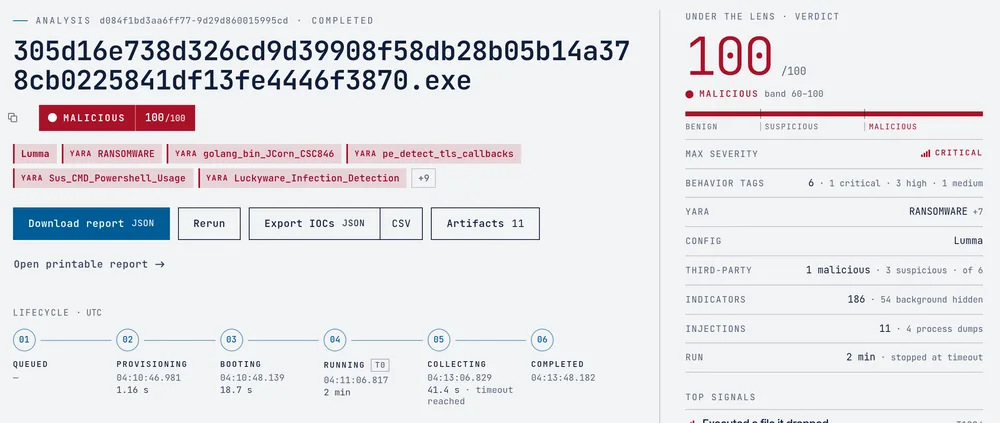
all 13 →self-hosted interactive malware sandbox. a go controller detonates samples in throwaway copy-on-write kvm windows/linux vms with per-job network isolation, then streams artifacts over kafka to yara, suricata, config-extractor, and verdict workers. a c windows kernel driver catches process command lines etw misses, drained over ioctl by a rust in-guest agent. live vnc view, pcaps, and memory dumps in the browser.
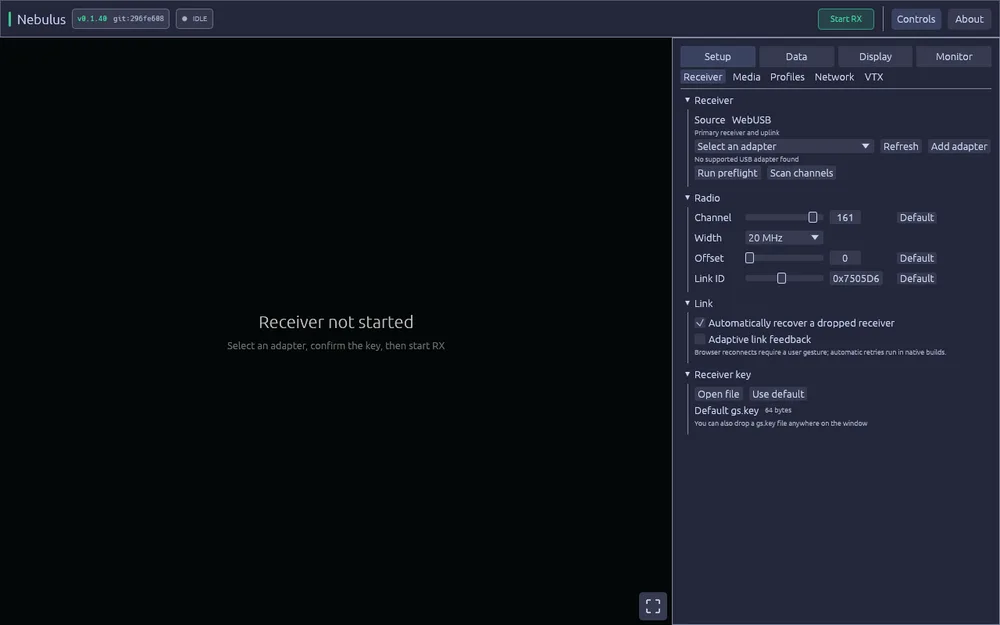
cross-platform fpv ground station and rust libraries for openipc. a userspace realtek rtl88xx usb wifi driver and simd fec/rtp receiver feed one packet pipeline shared across desktop, android, and the browser via wasm + webusb, with hardware h.264/h.265 decode through webcodecs, va-api, videotoolbox, and d3d11.
a 3-node incus cluster defined in opentofu, with every service as its own declarative nixos flake. runs a self-hosted forgejo (git.neels.dev) with ci runners and a nix cache, prometheus/loki/grafana, a wireguard egress gateway, and an sni-filtering transparent proxy covered by nixos vm tests.
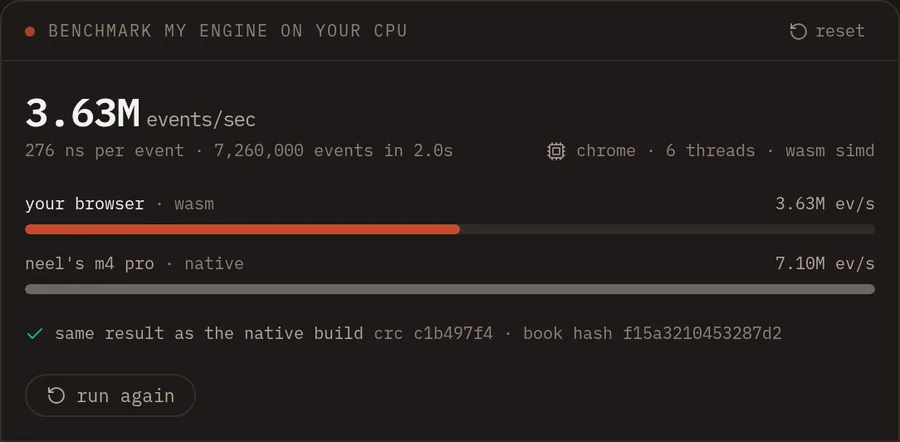
market replay engine simulating latency, slippage, fees, and risk controls with auto-trip kill switches. 252 unit tests.




writing
all posts →How openipc-rs gets FPV video from a drone into a browser tab: a userspace Realtek Wi-Fi driver over WebUSB, WFB decryption and Reed-Solomon FEC in Rust and WebAssembly, and WebCodecs for decoding.
read it →9 minThe hardware in my three-node Incus cluster, and how I define it declaratively with OpenTofu, a NixOS flake per service, and Nix-built Windows images.
read it →16 minHow I built malbox, a self-hosted interactive malware sandbox with disposable KVM VMs, a Windows kernel driver, and a Kafka analysis pipeline, all deployed with Nix.
read it →11 min
 terraform-provider-incus
 trezor-firmware
 libxml2